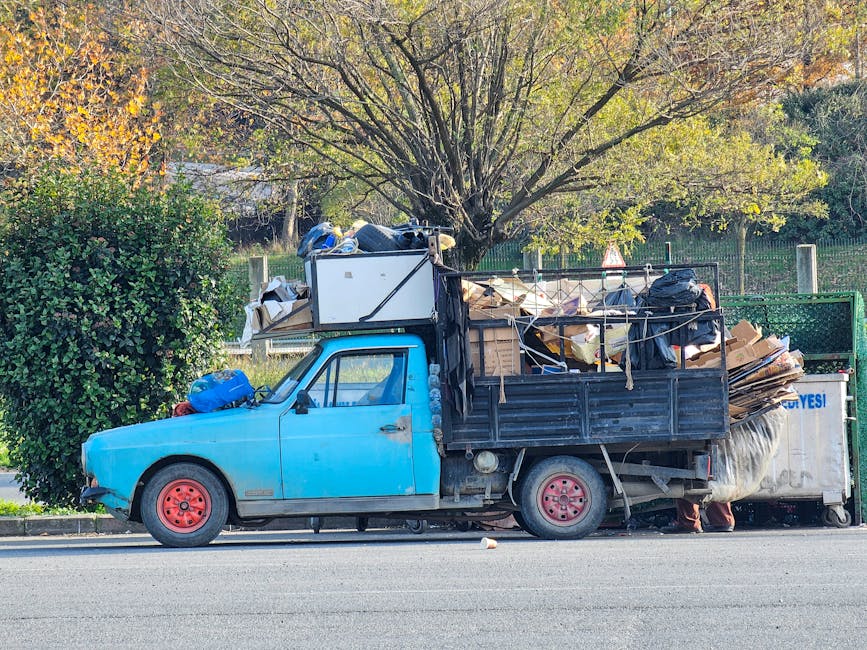
Erith Market bulky waste pickup and local rubbish services: a practical local guide
If you are staring at an old sofa, a broken wardrobe, a bag of mixed junk, or a pile of packaging that has somehow grown overnight, you are not alone. Erith Market bulky waste pickup and local rubbish services are exactly the kind of help people look for when home clear-outs, shop refits, flat moves, or garden jobs suddenly create more waste than the bin day can handle. The tricky part is not just getting rid of it. It is choosing a service that is timely, sensible, careful with access, and clear about what happens next.
This guide breaks the topic down in plain English. You will see how the pickup process usually works, what counts as bulky waste, who these services suit best, common mistakes to avoid, and how to judge the difference between a quick fix and a proper waste solution. A bit of good planning goes a long way here, honestly.
Table of Contents
- Why Erith Market bulky waste pickup and local rubbish services Matters
- How Erith Market bulky waste pickup and local rubbish services Works
- Key Benefits and Practical Advantages
- Who This Is For and When It Makes Sense
- Step-by-Step Guidance
- Expert Tips for Better Results
- Common Mistakes to Avoid
- Tools, Resources and Recommendations
- Law, Compliance, Standards, or Best Practice
- Options, Methods, or Comparison Table
- Case Study or Real-World Example
- Practical Checklist
- Conclusion
- Frequently Asked Questions
Why Erith Market bulky waste pickup and local rubbish services Matters
Bulky waste is not just "big rubbish". It usually means items that are awkward to carry, too large for normal bins, or messy enough that you do not want them hanging around for weeks. Think mattresses, sofas, broken cabinets, white goods, old office furniture, shop fixtures, shed contents, or the random mix that comes with a clear-out after years of storage. In a busy area, especially one with mixed residential and commercial activity like Erith Market, leaving bulky waste unmanaged can quickly become a practical nuisance.
There is also the simple reality of access. Flats above shops, narrow passages, side entrances, shared stairwells, and parking restrictions can make DIY disposal a lot harder than it looks on paper. The item may be easy to describe and a nightmare to move. That is usually where a local rubbish service earns its keep.
Another reason this matters: bulky waste often contains recyclable or reusable material. A good service will think beyond the "take it away" moment. They will sort, separate, and route items appropriately where possible. If you are interested in the broader picture of responsible disposal, it is worth looking at recycling and sustainability practices as part of the decision.
Expert summary: the best bulky waste service is not simply the quickest one. It is the one that handles access properly, deals with the right materials, and leaves you with less stress, not more.
How Erith Market bulky waste pickup and local rubbish services Works
Most local bulky waste collections follow a fairly straightforward process, but the detail matters. You normally start by describing what needs removing, roughly how much there is, and where it is located. From there, the provider should be able to decide whether it is a simple single-item pickup, a mixed-load clearance, or a more involved job that needs extra labour or special handling.
In practice, the process often looks like this:
- You list the items. Be specific. "Two wardrobes, one mattress, one broken desk, and three bin bags of misc." is much more useful than "a lot of stuff".
- You explain access. Stairs, lifts, parking, loading distance, and any tight corners all affect the job.
- You get a quote or estimate. Pricing is usually based on volume, weight, labour, and any special disposal needs.
- A pickup is scheduled. Same-day or next-day collection is common for straightforward jobs, though not guaranteed.
- The crew removes and sorts the waste. Reusable, recyclable, and non-recyclable items are handled separately where possible.
- The site is left tidy. That final sweep makes a bigger difference than people expect. You notice it when it is missing.
For domestic jobs, the service might overlap with home clearance, house clearance, or even flat clearance if the waste is part of a wider move or declutter. For workspaces, the same idea extends into office clearance and business waste removal.
One small but important point: good providers do not rush past the awkward questions. If there is a fridge, a sofa, a damaged appliance, or something potentially hazardous in the load, they should flag it early rather than hoping it will sort itself out on the day. It rarely does.
Key Benefits and Practical Advantages
People often think the main benefit is speed. Fair enough, that is a big one. But there is more to it than speed alone.
- Saves physical effort: bulky items are often too awkward for one person to move safely.
- Reduces disruption: one coordinated pickup is much easier than several half-finished trips.
- Helps with access problems: local crews usually understand tight streets, shared entrances, and parking realities better than a distant operator.
- Improves safety: heavy furniture and mixed junk can cause trips, strain, or damage if handled badly.
- Supports better disposal: reusable and recyclable materials can be separated rather than dumped together.
- Creates breathing room: clearing clutter makes a room feel usable again. You can actually see the floor. Lovely, that.
There is also a hidden benefit: decision fatigue drops. When the pile has been sitting there for weeks, it starts to feel bigger than it is. Getting it dealt with in one go is often a mental reset as much as a practical one.
If your situation involves old furniture, it may be worth exploring furniture clearance or furniture disposal options, especially if items are too large or worn out to pass on. For upholstered items, mattress and sofa disposal can be the most suitable route.
Who This Is For and When It Makes Sense
This kind of service is useful for more people than you might expect. It is not just for major house moves or end-of-tenancy panics.
It makes sense if you are:
- clearing out a spare room, loft, garage, or shed
- replacing old furniture and need the old pieces gone quickly
- preparing a property for sale, letting, or renovation
- moving stock, fixtures, or packaging from a small business
- dealing with waste after decorating or light building work
- helping a relative downsize or manage an inherited property
- trying to avoid multiple trips to the tip
For example, a family may discover that an old sofa will not fit downstairs without damage to the wall, and suddenly the whole afternoon has gone. Or a shop near the market might finish a refresh and find cardboard, broken shelving, and damaged display units all waiting in a back room. That is exactly the kind of day when local rubbish services are useful.
If the job involves general household clutter, garage clearance, loft clearance, or garden clearance may be more relevant than a one-off single-item pickup. The right category keeps the job simple and usually improves the estimate too.
Step-by-Step Guidance
If you want the cleanest possible experience, a little prep before the crew arrives helps a lot. Not too much. You are not expected to sort the universe. But a bit of structure saves time and avoids awkward surprises.
1. Identify what is going
Walk through the space and separate items into groups: furniture, appliances, mixed junk, garden waste, or building debris. If something might need special handling, put it in a separate note.
2. Check access routes
Look at stairs, hallways, lift size, parking restrictions, and whether the team can get close enough to load safely. In a busy local area, access can matter as much as the waste itself. Sometimes even a short carry distance changes the whole job.
3. Remove obvious personal items
Before collection day, take out documents, keys, chargers, remote controls, ornaments, and anything valuable or private. It sounds obvious, but everyone forgets one or two things. Everyone.
4. Ask about item types
Appliances, fridges, mattresses, sofas, and potentially hazardous items may need separate treatment. If you are unsure, ask early. A good provider should explain the difference plainly, without jargon or dodgey promises.
5. Compare the quote with the real scope
Make sure the quote reflects the load, labour, access, and disposal type. A suspiciously vague price is not always a bargain. It can turn into a longer and more expensive conversation later on.
6. Confirm timing and arrival details
Ask when the team expects to arrive, how long the job might take, and whether they need you on site. If the waste is in a shopfront or shared building, timing matters for neighbours too.
7. Prepare the area
Clear a path if you can. Put loose smaller items in bags or boxes. Move cars if parking is tight. Small effort, big difference.
For large or mixed jobs, you may find it helpful to read about waste removal alongside the clearance pages. If it is construction-related, builders waste clearance is the better fit.
Expert Tips for Better Results
Here are the little things that usually improve a collection job more than people expect.
- Be brutally clear about volume. A single armchair is one thing; an armchair plus half a shed of extras is another.
- Photograph awkward items. If access is tight or items are unusual, pictures can save a lot of back-and-forth.
- Group similar materials. It helps the team plan loading and disposal more efficiently.
- Keep one item back if you are undecided. It is better to pause than to regret a rushed clear-out.
- Ask about recycling pathways. This is especially sensible if the load includes metal, wood, cardboard, appliances, or reusable furniture.
- Book before the pile becomes a problem. Once it blocks a door, stairs, or access route, the job is more awkward for everyone.
A sensible local provider should also be transparent about security, payment, and handling. For peace of mind, it is worth checking pages like payment and security, insurance and safety, and health and safety policy. Those details may feel dry. They are not glamorous. But they matter when someone is moving a heavy wardrobe down a shared staircase.
And yes, sometimes the best tip is simply to stop pretending the old chest of drawers will magically become useful again. It will not. We have all had one of those pieces sitting in the corner for far too long.
Common Mistakes to Avoid
Most problems with bulky waste pickups come from vague planning, not bad intent. The good news is that they are easy to avoid once you know what to watch for.
- Underestimating the amount of waste: that "small pile" can turn into a full load once everything is gathered.
- Forgetting access issues: stairs, tight corners, and parking are not minor details.
- Mixing restricted items with general rubbish: this can delay the job or change the handling requirements.
- Leaving valuables in the clearance area: always do a final sweep.
- Choosing only on price: the cheapest quote is not always the real cost if disposal or labour is unclear.
- Booking the wrong service type: furniture jobs, office waste, builders debris, and garden waste are related, but not identical.
Another common slip is assuming every provider handles every material. That is not always true. If the load includes a fridge, an appliance, or anything that may need special processing, ask first. For appliance-specific jobs, fridge and appliance removal is often more appropriate. If the load contains anything unsafe or unusual, hazardous waste disposal should be discussed separately.
Tools, Resources and Recommendations
You do not need complicated tools for a bulky waste pickup, but a few simple things make the process smoother.
- Phone camera: useful for showing item size, stair access, or loading points.
- Measuring tape: especially handy for sofas, fridges, desks, and wardrobes.
- Bin bags and boxes: good for loose rubbish, smaller items, and mixed clutter.
- Notebook or phone checklist: keeps you from forgetting items hidden in cupboards or under beds.
- Property access notes: floor level, entry code, parking restrictions, and gate details.
If you are comparing what can be taken away with what belongs in a skip, the page on what can go in a skip can be a useful reference point. It is not a substitute for proper advice on a specific load, but it helps you understand the boundaries.
For those planning a larger declutter, it can also help to think in stages: start with furniture, move to loose rubbish, then deal with special items like appliances or confidential papers. If a business is clearing records or sensitive material, confidential shredding may need to sit alongside the waste pickup. Different problem, same need for tidy handling.
Law, Compliance, Standards, or Best Practice
Waste disposal in the UK is not something to take casually. Without getting too legalistic, there are a few basic principles worth keeping in mind. Waste should be handled by a responsible operator, and it should end up in the right place for reuse, recycling, recovery, or disposal. If you are using a professional service, it is sensible to expect that they operate in line with normal UK waste management practice and carry the right safety procedures.
Best practice usually means:
- clear descriptions of waste type before collection
- safe handling of heavy or awkward items
- separate treatment for items that need special disposal
- careful transport so nothing spills, breaks, or becomes a hazard
- evidence of proper insurance and operational controls
If you are a business, your responsibilities can be a bit broader. Mixed commercial loads, office furniture, archived paper, and fit-out waste all bring their own handling issues. That is why services like business waste removal and office clearance are worth considering instead of treating everything as generic rubbish.
There is also a simple common-sense rule: do not leave potentially dangerous material mixed into household waste. If in doubt, ask before collection. Better a slightly longer conversation than a wrong disposal route. Nobody needs that kind of surprise.
Options, Methods, or Comparison Table
People usually compare three broad approaches: self-haul, skip hire, or a staffed bulky waste pickup. Each has a place.
| Option | Best for | Pros | Watch-outs |
|---|---|---|---|
| Self-haul to a facility | Small amounts, flexible schedules | Can be cost-effective if you already have transport | Heavy lifting, parking, time, and multiple trips |
| Skip hire | Longer projects with steady waste output | Handy for ongoing clear-outs and renovation debris | Needs space, permits may be needed, and loading is on you |
| Bulky waste pickup | Large items, mixed loads, quick clear-outs | Convenient, labour included, less physical strain | May cost more than doing it yourself for very small loads |
So which one is best? It depends. If you are clearing one mattress and a broken chair, a dedicated pickup may be the least stressful route. If you are renovating and the waste keeps arriving for two weeks, a skip may make more sense. And if you have the time, transport, and energy, self-haul can work. Most people, to be fair, prefer the option with the least faff.
For readers weighing up skip-style options, the article on what can go in a skip helps you understand loading limits and common exclusions. That comparison is useful even if you end up choosing a pickup instead.
Case Study or Real-World Example
Picture a typical late-afternoon clear-out in Erith Market. A small business has just finished replacing old display shelves, broken packaging has built up in the back room, and there is a damaged office chair, a couple of awkward cabinets, and a stack of flattened cardboard. Nothing dramatic. Just enough to get in the way every time someone walks past with a crate or a mop.
The owner does not want a week of mess, and there is no spare van or staff time for repeated trips. A local rubbish pickup is arranged for the following morning. The team arrives, checks the access route, moves the heavier pieces first, then loads the mixed waste in a sensible order. The cardboard is separated from the furniture where possible, the space is swept, and by lunchtime the back room is usable again. Simple, but it changes the rhythm of the whole day.
That is the real value of this kind of service. Not drama. Not gimmicks. Just a problem that stops being a problem. A home version of the same story might be a loft clear-out where one old wardrobe, two bags of mixed rubbish, and a broken appliance have been sitting for months because nobody had the patience to move them. Once gone, the space suddenly feels bigger. Quiet even.
Practical Checklist
Use this before booking:
- List every item you want removed
- Check whether any items need special handling
- Measure anything unusually large or heavy
- Confirm access, stairs, parking, and entry details
- Remove personal belongings and valuables
- Decide whether this is a one-off pickup or a larger clearance
- Ask about timing, load type, and payment method
- Review safety, insurance, and disposal approach
- Keep a photo record if the load is unusual
- Leave a clear path for the collection team
If the job is part of a wider property project, you may also want to consider house clearance, home clearance, or garage clearance rather than treating each item in isolation. That often saves time and a bit of headache.
Conclusion
Erith Market bulky waste pickup and local rubbish services are most useful when the job is too awkward, too heavy, or too time-sensitive to tackle alone. The best results come from clear planning, accurate descriptions, and a service that understands local access, local pace, and the realities of mixed waste. Done well, it is not just rubbish removal. It is a small reset for your space, your time, and your head.
Whether you are clearing a flat, refreshing a shop, or finally dealing with the pile in the garage that has been giving you grief for months, the main thing is to choose a method that fits the load and the day you actually have. Not the ideal day. The real one.
Get a free quote today and see how much you can save.
If you want to understand the team behind the service a little better, take a look at about us, or if you are ready to move things along, book online when it suits you.
Frequently Asked Questions
What counts as bulky waste in a local pickup?
Bulky waste usually means items that are too large, awkward, or heavy for normal bin collection. Sofas, wardrobes, mattresses, desks, appliances, and mixed household clutter are common examples.
Is Erith Market bulky waste pickup and local rubbish services suitable for one item only?
Yes, often it is. A single bulky item can be collected on its own, especially if it is too large for a regular bin or too awkward for you to move safely.
How quickly can bulky waste usually be collected?
That depends on the provider and the size of the job. Some collections can happen quickly, while larger or more complex clearances may need a scheduled slot.
Do I need to move the waste outside before pickup?
Not always. Many services collect from inside the property, provided access is safe and agreed in advance. But if items are already near an exit, it can make the job faster.
Can furniture and appliances be collected together?
Often yes, but it is best to mention both at the quote stage. Some appliances may need separate handling, so clear information helps avoid delays.
What if I have rubbish in a flat with stairs and no lift?
That is very common. Just explain the access clearly when booking. Stairs, narrow corridors, and parking distance can affect pricing and timing, so it is better to mention them early.
Is it better to book a bulky waste pickup or a skip?
If you have large items and want labour included, a pickup is often easier. If you are generating waste over several days and have space for a container, a skip may suit better. It depends on the job, not just the price.
Can local rubbish services handle garden waste too?
Yes, many can. For mixed outdoor jobs, garden clearance is often the right service type, especially if you have branches, bags, broken pots, or old outdoor furniture.
What should I do with confidential papers or records?
Keep them separate and ask about secure disposal. If you are dealing with business paperwork, confidential shredding is the safer route than mixing documents into general waste.
Are there items that cannot go in a normal bulky waste pickup?
Yes. Some materials need special handling, such as hazardous waste or certain appliances. If you are unsure, disclose the item before booking so you get the right advice.
How do I know whether a quote is fair?
A fair quote should reflect the item type, volume, access, labour, and disposal requirements. If a price is very vague, ask what is included. Clarity is usually a good sign.
What is the best way to prepare for collection day?
Make a list, clear a path, remove valuables, and group items by type. A little prep saves time and reduces the chance of something being missed. It also makes the whole process feel much calmer.
Sometimes the least glamorous jobs are the ones that make the biggest difference to daily life. Once the clutter is gone, the room can breathe again.